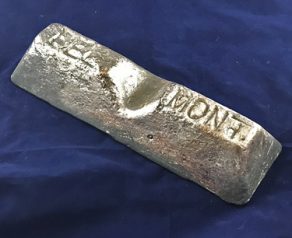
Aluminum Bronze UNS C95200 is a copper-aluminum-iron casting alloy with a nominal composition of 87.5% Cu, 9% Al, and 3.5% Fe, conforming to CDA number 95200. The aluminum content produces a hard wear-resistant surface with good strength and corrosion resistance, while the iron addition refines grain structure and improves both strength and hardness. The alloy develops a protective aluminum oxide surface film providing excellent resistance to corrosion in seawater, acids, and industrial atmospheres. C95200 aluminum bronze bearings are specified for heavy-load bearing applications where the combination of high compressive strength, good wear resistance, and corrosion resistance is required. Typical applications include sleeve bearings, thrust washers, bushings, worm gears, and structural components in marine equipment, hydraulic machinery, and mining equipment. Supplied in 2-20 lb ingots for foundry production of bearing and structural castings.
Common technical inquiries regarding Aluminum Bronze UNS C95200
C95200 offers significantly higher compressive strength and hardness than standard tin bronzes — compressive strength typically exceeds 100,000 psi compared to 60,000-80,000 psi for C90300 Navy G bronze. This makes aluminum bronze the correct specification for bearing applications involving shock loads, high unit pressures, or slow oscillating motion where tin bronzes would deform plastically. Aluminum bronze also outperforms tin bronze in abrasive environments where hardness directly determines wear life.
C95200 is not a self-lubricating bearing material — it requires a continuous lubricant film for reliable service. Unlike leaded bronzes where lead provides emergency dry-running capability, aluminum bronze has no internal lubricant phase. Proper lubrication system design with adequate oil supply, correct viscosity, and clean filtration is essential. In intermittently lubricated applications, aluminum bronze bearings are more prone to galling than leaded alternatives.
Aluminum bronze is prone to aluminum oxide inclusion formation during melting and pouring. Melting must be done quickly under a flux cover with minimal stirring to reduce oxide generation. Pouring should be smooth and non-turbulent using bottom-gated systems that fill the mold cavity from below to prevent oxide entrainment. Degassing with nitrogen before pouring reduces hydrogen porosity. The alloy has significant solidification shrinkage requiring adequate risering for sound pressure-tight castings.
To provide the best experiences, we use technologies like cookies to store and/or access device information. Consenting to these technologies will allow us to process data such as browsing behavior or unique IDs on this site. Not consenting or withdrawing consent, may adversely affect certain features and functions.
Functional
Always active
The technical storage or access is strictly necessary for the legitimate purpose of enabling the use of a specific service explicitly requested by the subscriber or user, or for the sole purpose of carrying out the transmission of a communication over an electronic communications network.
Preferences
The technical storage or access is necessary for the legitimate purpose of storing preferences that are not requested by the subscriber or user.
Statistics
The technical storage or access that is used exclusively for statistical purposes.The technical storage or access that is used exclusively for anonymous statistical purposes. Without a subpoena, voluntary compliance on the part of your Internet Service Provider, or additional records from a third party, information stored or retrieved for this purpose alone cannot usually be used to identify you.
Marketing
The technical storage or access is required to create user profiles to send advertising, or to track the user on a website or across several websites for similar marketing purposes.