Lead-free20 lb Consistent Ingot WeightDesigner's First ChoiceExcellent Plating CharacteristicsHot-Chamber Die Casting Grade
Standard zinc die casting alloy (96% Zn, 4% Al) — the most widely used zinc die casting alloy in North America. Excellent strength, ductility, plating, and finishing characteristics. 4-20 lb ingot.
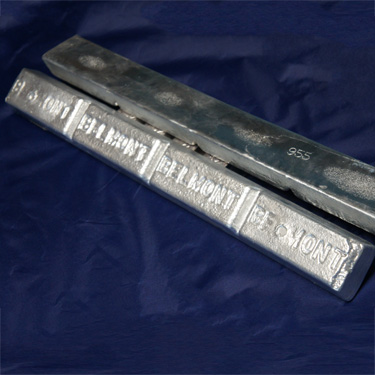
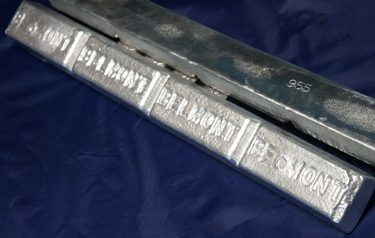
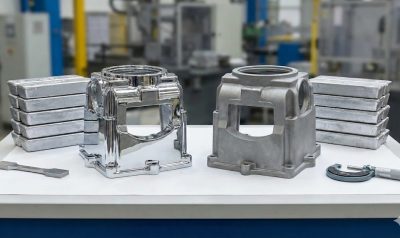
Zamak 3 is a zinc-aluminum die casting alloy with a nominal composition of 96% Zn and 4% Al with controlled additions of magnesium and copper. It is the most commonly used zinc die casting alloy in North America, providing an excellent combination of strength, ductility, and dimensional stability. Zamak 3 provides excellent plating and finishing characteristics — its fine-grained, low-porosity die cast surface is the standard substrate for chrome, nickel, and gold plating in automotive, hardware, and consumer goods applications. The alloy also provides excellent casting characteristics in hot-chamber die casting machines, with good fluidity for thin-wall sections, fast cycle times, and long die life. Available in 4-20 lb ingots for die casting furnace loading.
Available Forms
4-20 Lb. Ingot
Product Code
8961
Technical Info
Thermal Properties
Melting Point (Solidus)718
Melting Point (Liquidus)729
Physical Properties
Density (imperial)0.24
Density (metric)6.6
Physical Properties
Primary ElementsZn, Al, Mg
Lead FreeYes
Performance tags
20 lb Consistent Ingot WeightDesigner's First ChoiceExcellent Plating CharacteristicsHot-Chamber Die Casting GradeHot-Chamber Furnace CompatibleLow Surface Oxide per Unit WeightMost Widely Used Zinc Die Casting AlloyStandard Die Casting Production Format
Nominal Composition
96% Zn
4% Al
Frequently Asked Questions
Common technical inquiries regarding Zamak 3
Zamak 3 has the largest installed base of processing data, tooling experience, secondary operation tooling, and plating chemistry of any zinc die casting alloy — making it the lowest-risk specification for new die casting programs. Its combination of adequate mechanical properties (tensile strength 41,000 psi, elongation 10%), excellent plating adhesion from its fine-grained die cast surface, dimensional stability (less than 0.001 inch per inch change over 20 years at room temperature), and outstanding hot-chamber die casting productivity (cycle times of 1-3 seconds for small parts) are well understood by designers, toolmakers, and job shops throughout North America. No other zinc alloy offers this combination of properties, processing ease, and supplier availability.
Zamak 3 requires Special High Grade (SHG) zinc (99.99% Zn minimum) as the base metal. The critical impurity limits are: lead below 50 ppm, cadmium below 20 ppm, and tin below 20 ppm — elements that cause intergranular corrosion and dimensional instability (the aging failure mode) in Zamak alloys. Even small exceedances cause progressive embrittlement and swelling of cast parts over months to years in service, leading to field failures in assembled components. Commercial 99% zinc is not adequate for Zamak production. All major Zamak producers source SHG zinc with certified analysis and maintain strict incoming inspection to protect alloy quality and downstream warranty liability.
Store Zamak 3 ingots in a dry, enclosed area away from moisture — wet ingots cause violent steam explosion when charged to the molten pot and zinc oxide contamination that produces porosity in die castings. Stack on pallets off the floor to prevent moisture absorption from ground condensation. Maintain FIFO inventory rotation to prevent long storage periods. Avoid storing near lead-containing materials such as batteries, lead shot, or linotype alloy — contamination of even a single ingot with lead above 50 ppm from contact with lead-containing materials can compromise a production heat. Label all incoming lots with certificate of analysis reference and retain COAs for traceability in the event of casting quality concerns.
95% Zn / 5% Al zinc-aluminum solder with superior corrosion resistance. Available as capping bar; 4-20 ingot; and regular bars. Used for aluminum-to-aluminum and aluminum-to-zinc soldering.