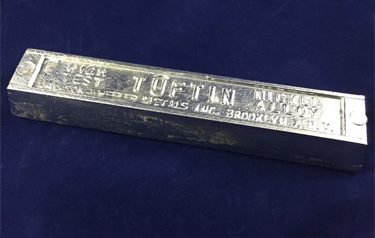
Tuftex Gib Shoe Alloy is a proprietary lead-base Babbitt alloy commonly used in the relining of bearings in elevators specifically for gib shoe bearing applications. Gib shoes are the sliding contact elements in elevator guide rail systems that maintain the car alignment and absorb lateral forces as the elevator moves in its shaft. The gib shoe contact surface must be soft enough to conform to the guide rail without scoring it; hard enough to resist wear over extended service intervals; and compatible with the dry or lightly lubricated contact conditions typical of elevator guide systems. Tuftex Gib Shoe Alloy’s proprietary lead-base formulation is optimized for these specific contact conditions providing the combination of conformability; moderate hardness; and wear resistance required for reliable elevator operation. Forms: ingot.
Product Code
P1
Technical Info
Thermal Properties
Melting Point (Solidus)464°F (240°C)
Melting Point (Liquidus)500°F (260°C)
Physical Properties
Density (imperial)0.363 lbs/in³
Density (metric)10.04 g/cm³
Primary ElementsPb · Sb · Sn · Ni · Cu
Lead FreeNo — contains lead
Key Features
Elevator Gib Shoe ApplicationProprietary Lead-Base BabbittGuide Rail ConformabilityJackson Wheeler Formulation
Nominal Composition
Proprietary
Frequently Asked Questions
Common technical inquiries regarding Tuftex Gib Shoe Alloy
Gib shoes are sliding contact pads mounted on elevator car frames that bear against the vertical guide rails running the height of the elevator shaft. They maintain car alignment and absorb lateral forces from passengers; loading; and car sway. The contact conditions differ from rotary journal bearings - gib shoes operate in intermittent or continuous sliding contact against a steel rail rather than around a rotating shaft with variable load direction and limited lubrication. A gib shoe formulation must perform under these different tribological conditions of guided linear sliding contact.
Gib shoe relining involves removing the worn alloy from the gib shoe housing by melting or machining; cleaning and preparing the housing contact surface; tinning the housing to promote bonding; and pouring or casting molten Tuftex Gib Shoe Alloy into the housing cavity. After solidification the new alloy surface is machined to the required contact geometry and clearance relative to the guide rail. Proper tinning adhesion is critical to prevent delamination of the new alloy layer during service.
Gib shoe lining service life depends on elevator duty cycle; guide rail condition; lubrication practice; and alloy properties - high-traffic elevators with poorly maintained rails may require relining every 1-3 years while low-traffic elevators in well-maintained shafts may go 5-10 years. Indicators of worn gib shoes include increased car sway or vibration; audible contact noise against the guide rails; visible scoring or grooving of the alloy surface; and excessive clearance between the shoe and rail.