
Product Code: B3

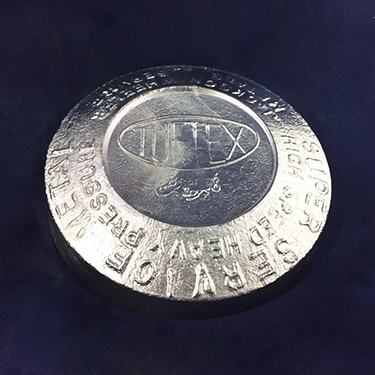
Tuftex Rollite 77

High Compression Strength Excellent Heat Transfer Rolling Mill and Heavy Press Bearing Jackson Wheeler Proprietary
Proprietary lead-base Babbitt with high compression strength and excellent heat transfer. Forms: ingot.
Solidus
464°F (240°C)
Liquidus
518°F (270°C)
Density
0.354 lbs/in³ (9.81 g/cm³)
Primary Elements
Pb · Sb · Sn · Ni · Cu
Nominal Composition
Proprietary
Custom request

Can't find the right composition?

Product Overview

Tuftex Rollite 77 is a proprietary lead-base Babbitt alloy formulated by Jackson Wheeler for high-compression applications requiring both strength under load and excellent heat transfer from the bearing surface. High-compression bearing applications include rolling mill equipment; heavy industrial presses; and large machinery where bearing loads generate significant compressive stress on the Babbitt lining and where efficient heat conduction away from the bearing interface is required to prevent thermal softening of the alloy. Rollite 77’s proprietary composition provides higher compression strength than standard lead Babbitt grades while maintaining the thermal conductivity needed to prevent heat buildup under continuous high-load operation. Forms: ingot.

Product Code

B3

Technical Info

Thermal Properties

Melting Point (Solidus)464°F (240°C)
Melting Point (Liquidus)518°F (270°C)

Physical Properties

Density (imperial)0.354 lbs/in³
Density (metric)9.81 g/cm³
Primary ElementsPb · Sb · Sn · Ni · Cu
Lead FreeNo — contains lead
Key Features
High Compression StrengthExcellent Heat TransferRolling Mill and Heavy Press BearingJackson Wheeler Proprietary

Nominal Composition

  • Proprietary

Frequently Asked Questions

Common technical inquiries regarding Tuftex Rollite 77
Rolling mill bearings support the work rolls and backup rolls that apply massive compressive force to the metal being rolled - bearing unit pressures in rolling mill applications can exceed 5000 psi far above the loads in typical industrial journal bearings. A Babbitt alloy must resist plastic deformation (creep) and fatigue under these sustained high loads to prevent bearing surface damage and maintain roll gap precision. Higher compression strength in a Babbitt alloy directly extends bearing life and reduces the frequency of costly bearing relining shutdowns in rolling mill operations.
Under high bearing loads friction at the bearing interface generates heat that must be conducted away through the Babbitt alloy into the bearing housing and cooling system. If the Babbitt thermal conductivity is insufficient the alloy temperature at the bearing surface rises causing softening and accelerated wear or seizure. Rollite 77's excellent heat transfer property helps maintain the bearing surface at a temperature below the alloy's softening point even under sustained high-load conditions extending bearing life and enabling operation at higher loads and speeds than lower-conductivity alloys.
Tin-base Babbitt alloys generally have higher hardness; tensile strength; and fatigue resistance than lead-base alloys making them better suited for the highest-load highest-speed bearing applications. Lead-base Babbitt offers better embeddability; lower cost; and adequate performance for moderate load applications. For rolling mill bearings with very high unit pressures tin-base Babbitt or special high-strength lead Babbitt formulations like Rollite 77 are specified. The choice depends on the specific mill design; roll materials; rolling speed; lubrication system; and required bearing life.

Request a Quote

Complete our Quote form, and we'll respond with options for you!