
Many metals are used in their pure powder form in the manufacturing of various products. There are many grades of iron powder, as they are categorized based on their purity, grain size, density, and the manufacturing method. So the iron powder will be modified to fit into the application. Iron Powder Properties Iron powder is…
|
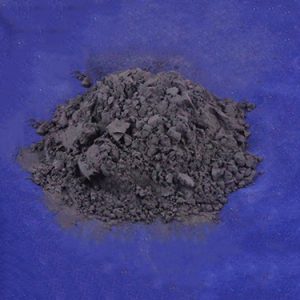
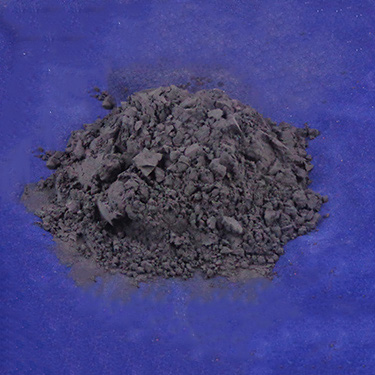
#150 Cast Iron Powder is a specialized metallic powder designed for use in the manufacturing of specialty alloys and as a reactive component in pyrotechnic mixtures. Known for its specific combustion properties and carbon content, it is frequently utilized in the production of sintered parts, chemical reagents, and as a magnetic additive in various industrial applications. This grade provides a consistent particle size and high purity level, ensuring reliable performance in both high-temperature metallurgical processes and complex chemical formulations. |
|
| Forms: |
|
|---|---|
| Belmont Product Code | FE004A |
| Technical Info: |
|
|---|
Downloads:
| Datasheet |
Related products
-


High Grade Black #200 is a premium Cupric Oxide (CuO) developed for high-purity industrial and chemical applications. It serves as a critical colorant in the production of glass, ceramic glazes, and enamels, providing deep, consistent tones. Beyond aesthetics, it is extensively used as a catalyst in chemical processing, in the formulation of wood treatment chemicals, and as a reliable source of copper in electroplating and the synthesis of other copper-based chemicals. Its high reactivity and consistent particle size ensure optimal performance across diverse manufacturing sectors.
Forms: - Cupric Oxide
Belmont Product Code 4303C Technical Info: - Molecular Weight: 79.55
- Appearance: Fine Black Powder
- Solubility: Insoluble in water; Soluble in acids
- Feature: High Chemical Purity
-
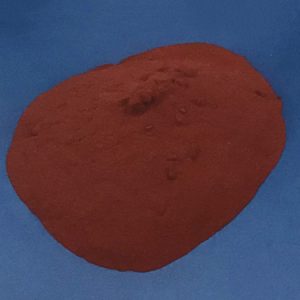
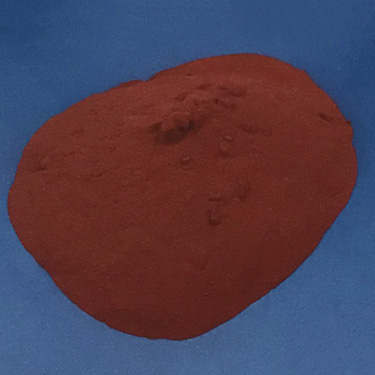
High Grade Red Grade RR is a premium Cuprous Oxide (Cu2O) engineered for high-purity industrial applications. It is widely utilized as a potent colorant and pigment in the production of glass, ceramic glazes, and enamels to achieve vibrant red and brownish tones. Beyond its aesthetic uses, this grade serves as a highly effective catalyst in various chemical syntheses, a critical component in wood treatment chemicals, and a reliable source of copper for specialty plating and the preparation of complex copper chemicals. Its consistent quality and particle distribution ensure predictable performance in diverse chemical and manufacturing processes.
Forms: - Cuprous Oxide
Belmont Product Code 4301A Technical Info: - Molecular Weight: 143.09
- Appearance: Fine Reddish-Brown Powder
- Solubility: Insoluble in water; Soluble in hydrochloric acid and ammonium hydroxide
- Feature: High Pigment Strength
RELATED POSTS

Silicon Powder Applications and Uses
Many manufacturers require pure metals in a range of different shapes to add as additives when making products. These metals provide different properties to the products, such as hardening metals, providing corrosion resistance, or reduces oxidation. Silicon is one metal found in a wide range of industries due to its versatility and cost-effectiveness. Pure silicon…
Powdered Metals Providing Versatile Appearance in Painting Applications
During the final phase of the manufacturing process, many products and components are coated with a paint to create a more aesthetically-pleasing appearance as well as to seal over the material to improve corrosion and stain resistance. When talking about most painting applications, people are aware of both oil-based and water-based paints. Yet metallic paints…
Discussion and Current Applications for 3d Metal Printing
Are you experimenting with 3D metal printing? Current industry trends say that 3D metal printing will overtake casting by 2020, according to Spotlight Metal, and it’s already being used for small batches of products and parts. If you’re on the forefront of this new manufacturing process or thinking about it, you’re probably interested in the…
3D Metal Printing: Alloys and Powder Types and Specs
Whether creating prototypes for application components, precision gears, or jewelry, more manufacturers are turning to the capabilities provided by 3D metal printing. Also called additive manufacturing, this process relies on technology that uses a metal powder in a layering process to produce the three-dimensional part. There are several methods used in the 3-D metal printing…
Common Uses for Powdered Metals
If you are debating the best form or metal to use for your manufacturing business, you may be surprised to learn that powdered metals have just as many uses as their metal alloy counterparts. In fact, adding a powdered metal to your master alloy can increase certain desirable properties and decrease certain undesirable properties. Our…
Creating complex shapes
Powdered metals help engineers produce parts cost-effectively What is the best way to make a 3-D part out of metal? It depends. There are a number of considerations involved, including time and money. To create parts, manufacturers can choose either a subtractive or an additive manufacturing process. Subtractive manufacturing involves taking a block of material…