
When people think of tin, their minds often go to simple plating or tin cans. Yet, in the world of non-ferrous metallurgy, tin is the versatile foundation for a crucial family of materials known collectively as “White Metals.” These alloys are defined by their relatively low melting points, bright silvery appearance, and remarkable range of…
|
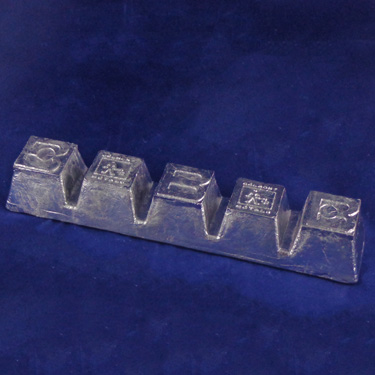
This is a Lead Base Babbitt used for low speed applications. |
|
| Forms: |
|
|---|---|
| Belmont Product Code | 58412 |
| Nominal Composition: |
|
|---|
| Technical Info: |
|
|---|
Related products
-
-
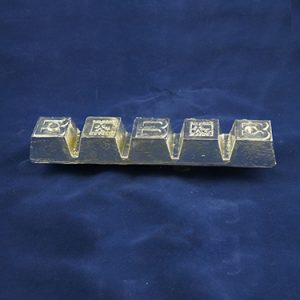
For high speed and heavy load applications slightly softer than Grade 1.
Forms: - 5-6 Ingot
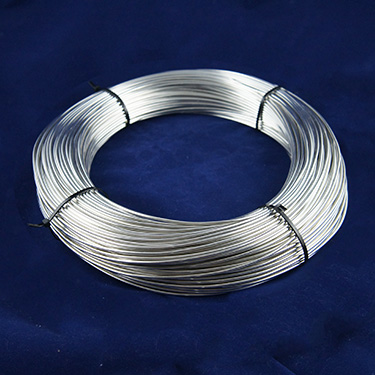
- 1/8", 1/16", 1/32", 3/16", 5/32" Dia Solid Wire
- Pigs
Belmont Product Code 7881 Nominal Composition: - 89% Sn
- 7.5% Sb
- 3.5% Cu
Technical Info: - ASTM B-23 Grade # : 2
- Melting Point-Solidus : 241 C, 466 F
- Melting Point - Liquidus : 354 C, 669 F
- Pouring Temperature : 425 C, 795 F
-
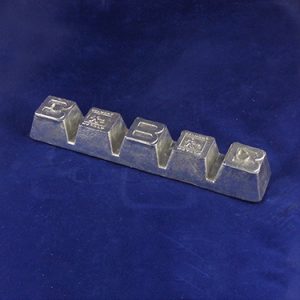
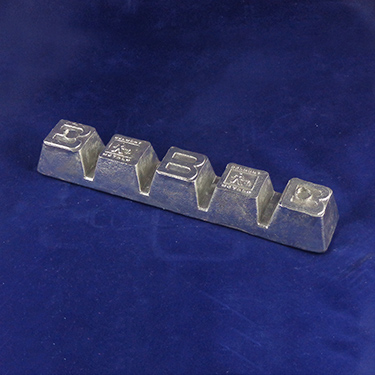
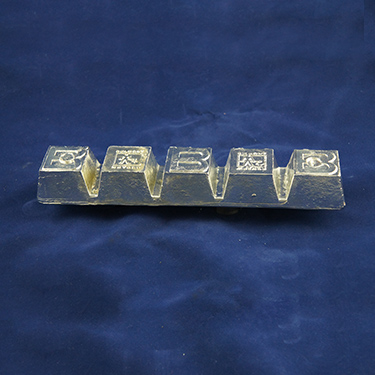
This is a Tin Base Babbitt for heavy load applications.
Forms: - 5-6 Ingot
- 1/4" Dia. Solid Wire
- 1/8" Dia Wire
Belmont Product Code 7852 Nominal Composition: - 84% Sn
- 8% Sb
- 8% Cu
Technical Info: - ASTM B-23 Grade # : 3
- Melting Point-Solidus: 240 C, 464 F
- Melting Point - Liquidus: 422 C, 792 F
- Pouring Temperature: 490 C, 915 F
RELATED POSTS

Selecting the Appropriate Babbitt Alloy
Babbitt metals are either lead or tin based, and the metal makes excellent bearings that are easy to pour as a DIY project. However, before you pour your bearings, you must select the correct babbitt metal in order to ensure your engine or piece of machinery operates correctly and efficiently. If you know the composition…
How to Pour Babbitt Bearings
Do you have old babbitt bearings that need to be replaced? Babbitt is a special type of metal that was designed for use as bearings due to its heat resistance and durability. The metal is normally comprised of varying percentages of copper, antimony, lead, arsenic and tin. The exact percentages vary, according to the grade….
Antimony: Possessing Durability and Versatility When Alloyed with Other Metals
Semiconductors, machine bearings, and utensils are all made from varying amounts of metal alloys. Yet these items also possess one common factor: antimony. Antimony is a semi-metal element that comes in both a powdered form as well as a hard and brittle metal. Possessing a silvery, blush white appearance, this element is highly desired when…
Smooth operation
Choosing the right Babbitt alloy helps to increase a bearing’s useful life Reliable machine operation depends on a properly working bearing assembly. If there is a failure within the bearing, such as a decrease in lubrication, the resulting heat from friction can not only decrease the life of the bearing but also cause equipment to…
Keep on rolling
Babbitt metals ensure machinery runs smoothly Bearings play an integral role in machine efficiency by reducing friction between moving parts. The earliest recorded examples of bearing usage date back to the Romans, and in the year 1500, Leonardo da Vinci sketched a design for a helicopter that incorporated ball bearings. Today, common types of bearings…