
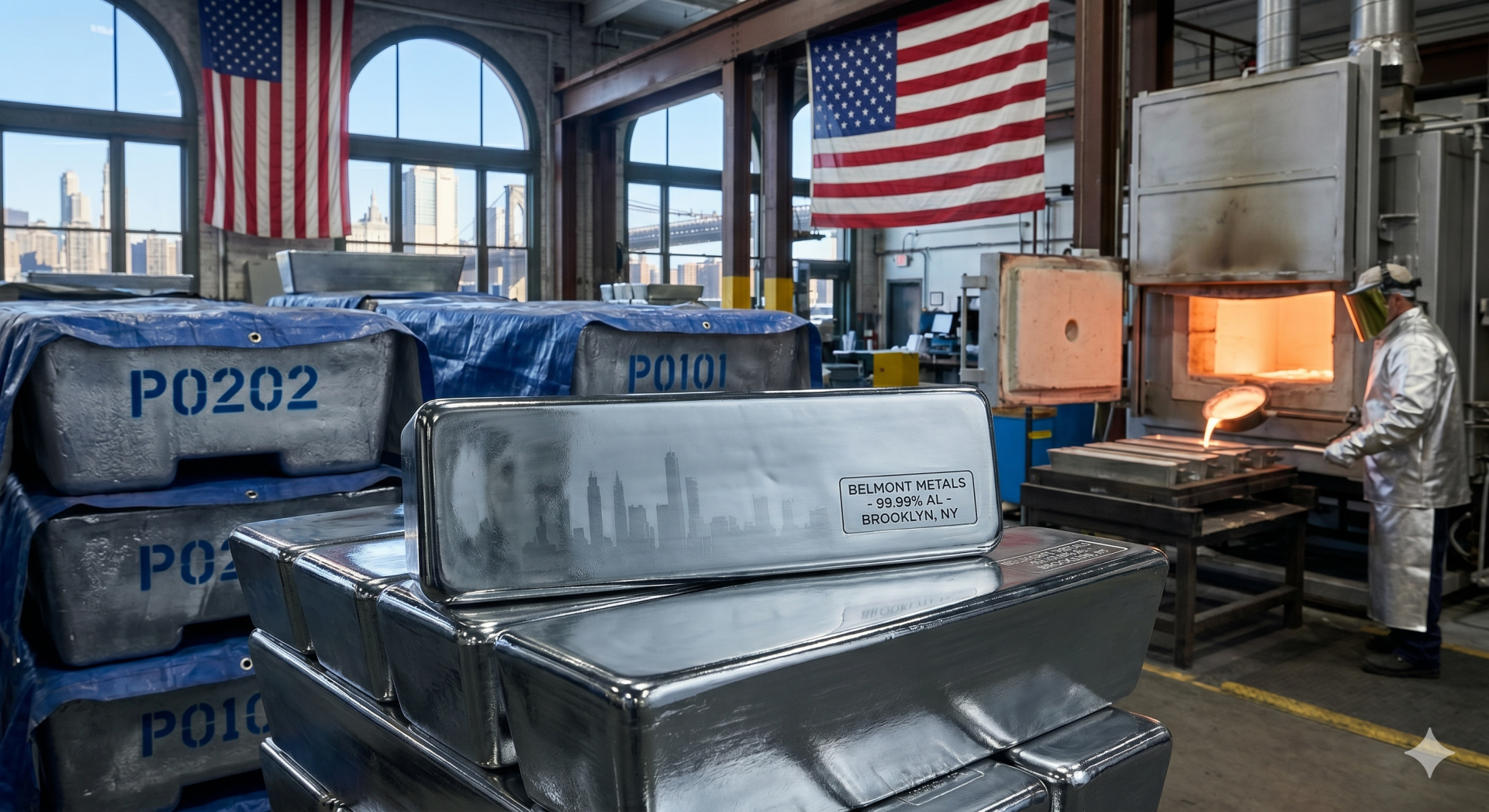
As the pace of innovation in the defense and aerospace sectors accelerates, the materials powering these advancements are coming under increased scrutiny. At Belmont Metals, we are seeing a significant shift in how engineers approach material selection, with High Purity Aluminum moving from a specialized requirement to a strategic necessity.
This month, we are diving into why these ultra-clean alloys are essential for mission-critical applications and how the industry is navigating a tightening supply across all high-grade categories.
Engineering for Extremes: The High Purity Advantage
In defense manufacturing, “good enough” is never the standard. High purity aluminum—typically categorized by its lack of tramp elements like iron and silicon—provides the predictable performance required for complex systems.
-
Tactical Armor and 7xxx Series: High-strength alloys like 7075 and the high-purity 7475 are the gold standard for military armor and mobile bridging. When purity is tightly controlled, these materials exhibit superior fracture toughness and a marked resistance to stress corrosion cracking, ensuring reliability in the field.
-
Weight Reduction with Al-Li Alloys: The push for lighter, faster, and more fuel-efficient aircraft has led to the rise of Aluminum-Lithium (Al-Li) alloys such as 2095 and 2195. These require ultra-clean base material to achieve a 10% weight reduction while increasing structural stiffness—critical for jet fighters and satellite frames.
-
Advanced Electronics: For radar housing and electronic warfare systems, high purity (4N and 5N) is essential for maximum thermal conductivity, allowing sensitive components to remain cool in high-stress environments.
Market Intelligence: A Broadening Squeeze on High Grades
While the demand for these sophisticated alloys is surging, the supply side is facing a period of intense pressure. While much of the recent industry focus has been on P0202 (99.8% purity), the shortage has broadened significantly across the higher-purity spectrum.
We are currently tracking a notable scarcity in several key grades that are critical for defense-grade melts:
-
P0101 (99.9% Purity): Traditionally the baseline for aerospace-grade primary aluminum, P0101 is becoming increasingly difficult to source as smelting capacities are diverted to standard commercial grades.
-
99.9% (3N) and 99.99% (4N) Ingots: The “cleanest” tiers of aluminum are facing extended lead times. The fractional crystallization and specialized refining required to reach these levels are energy-intensive, and global energy volatility has forced many refiners to prioritize volume over extreme purity.
-
Strategic Competition: The semiconductor and electric vehicle industries are increasingly vying for these same high-purity streams once reserved exclusively for aerospace and defense.
Navigating the Current Landscape
At Belmont Metals, we’ve spent over 130 years managing the complexities of the non-ferrous market. Based in Brooklyn, our team is working daily to leverage our global network to secure the high-purity chemistries and specialized alloys our customers require to stay on schedule.
If your upcoming projects require High purity aluminum, P0101, or custom-melt additions, we recommend starting the procurement conversation early. Our technical experts are available to help you forecast your needs and explore material options to mitigate the impact of the current market tightening.
Partner with Expertise To discuss your specific requirements or to see our full catalog of aluminum alloys, visit us at www.belmontmetals.com or reach out to your account representative.