Product Code: 8011

99% Zinc Metal

Brass Alloying Addition Die Casting Base Metal Galvanizing Grade Low Melting Point
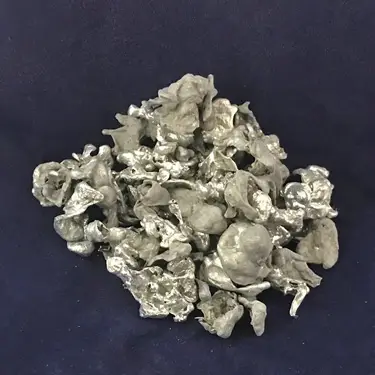
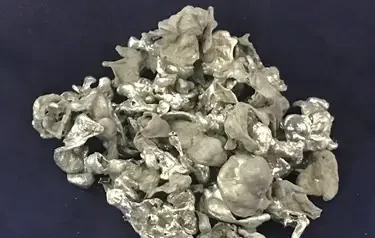
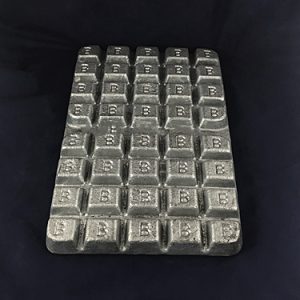
99% Zn zinc metal in mossy and waffle forms for galvanizing, die casting alloy production, brass alloying, and corrosion protection applications.
Solidus
787°F (419°C)
Liquidus
787°F (419°C)
Density
0.258 lbs/in³ (7.14 g/cm³)
Primary Elements
Zn, Pb
Nominal Composition
99% Zn
Custom request

Can't find the right composition?

Product Overview

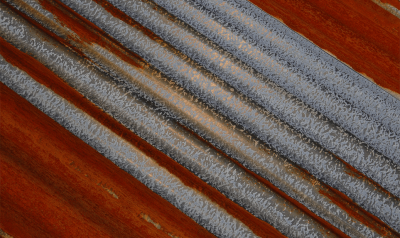
99% Zinc Metal is a commercial grade zinc with a nominal composition of 99% Zn, available in 3/4 inch and down mossy and 40-30 waffle forms. Zinc’s combination of low melting point (787°F), excellent atmospheric corrosion resistance, and low cost makes it the world’s fourth most consumed metal. The major application for zinc is galvanizing — the hot-dip or electrolytic coating of steel with zinc to provide sacrificial cathodic protection against atmospheric and aqueous corrosion, the most cost-effective corrosion protection system for structural steel. Zinc’s relatively low melting point and good tensile strength characteristics account for its extensive use as die casting alloy base metal (the Zamak family), where complex thin-wall parts are produced at high speed in permanent dies at pouring temperatures around 700-800°F. Additional applications include brass production (zinc is the primary alloying element in all brasses), zinc oxide production for rubber and tire manufacturing, and cathodic protection anodes. Available in 3/4 inch and down mossy and waffle forms.

Available Forms

3/4" and Down Mossy, 40-30 Waffle

Product Code

8011

Technical Info

Thermal Properties

Melting Point (Solidus)787
Melting Point (Liquidus)787

Physical Properties

Density (imperial)0.258
Density (metric)7.14

Physical Properties

Primary ElementsZn, Pb
Lead FreeNo — contains lead
Performance tags
Brass Alloying AdditionDie Casting Base MetalGalvanizing GradeLow Melting Point

Nominal Composition

  • 99% Zn

Frequently Asked Questions

Common technical inquiries regarding 99% Zinc Metal
Mossy zinc is produced by pouring molten zinc into water, creating irregular granular pieces with very high surface area per unit weight — ideal for applications requiring fast dissolution such as zinc addition to copper melts for brass production and zinc chemical synthesis. Waffle ingots are cast in a waffle-pattern mold producing a flat multi-section ingot that breaks cleanly into smaller sections along the waffle grooves; the waffle form is the standard for die casting furnace charging and galvanizing kettle additions where controlled addition weights are added at regular intervals. The higher surface area of mossy zinc also makes it the preferred anode material in some battery and galvanic protection applications.
For die casting alloys (Zamak family), lead, cadmium, and tin at even parts-per-million levels cause intergranular corrosion, dimensional instability, and embrittlement in service — effects collectively called aging that degrade Zamak parts over months to years. Zamak alloys require Special High Grade (SHG) or higher purity zinc with lead below 50 ppm and cadmium below 20 ppm as the base metal. The 99% Zinc Metal supplied by Belmont is commercial grade, adequate for general alloying, galvanizing, and brass production, but Zamak die casting production should specify SHG zinc to ensure the Zamak specification purity limits are met.
Paint provides barrier protection — as long as the film is intact, it prevents moisture and oxygen from reaching the steel. When paint is scratched or cut, the exposed steel corrodes rapidly from the scratch edge inward. Zinc galvanizing provides both barrier and sacrificial cathodic protection — the zinc corrodes preferentially to the steel it covers, and at a scratch or cut edge, the zinc electrochemically protects adjacent exposed steel over a distance of several millimeters, preventing rust creep. Galvanizing is specified when long-term protection without repainting is required (structural steel, bridges, utility poles), when the structure is difficult to inspect and maintain, or when cut edges and drilled holes must be protected without additional treatment.

Safety Data (SDS)

Request a Quote

Complete our Quote form, and we'll respond with options for you!