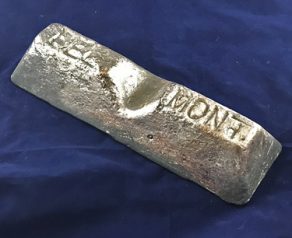
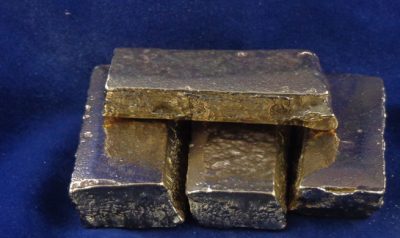
90/10 Copper Nickel UNS C96200 is a copper-nickel casting alloy with a nominal composition of 86.85% Cu, 10% Ni, 1% Mn, 1.4% Fe, and 0.75% Cb, conforming to CDA number 96200. The 10% nickel content provides excellent resistance to uniform and local corrosion in seawater, while iron and manganese additions improve strength and impingement resistance. The alloy is notably less susceptible to stress corrosion cracking than other copper alloys in chloride environments. C96200 is the standard specification for seawater piping systems, pump bodies, valve components, and marine hardware where reliable corrosion resistance in salt water service is required at moderate flow velocities. It is widely used in shipbuilding, desalination plants, offshore structures, and coastal power generation facilities. Supplied in 2-20 lb ingots for foundry production of marine and industrial castings.
Common technical inquiries regarding 90/10 Copper Nickel UNS C96200
Standard tin bronzes and leaded bronzes are susceptible to dealloying and stress corrosion cracking in seawater, particularly in systems with fluctuating chloride concentrations or dissolved oxygen. C96200's copper-nickel matrix is inherently resistant to these failure modes, providing reliable long-term performance in seawater without the risk of sudden dezincification failures. It also resists biofouling attachment, which reduces maintenance burden in seawater systems.
Iron at 1.4% significantly improves C96200's resistance to impingement corrosion at pipe bends, valve seats, and pump impeller surfaces under flowing seawater. Without iron, copper-nickel alloys are vulnerable to this failure mode even at moderate flow velocities. Columbium (0.75%) refines grain structure, improves weld heat-affected zone properties, and contributes to elevated-temperature strength. Both additions are essential to the alloy's performance in dynamic seawater service.
Yes — C96200 welds readily using GTAW or GMAW processes with matching copper-nickel filler metal (ERCuNi per AWS A5.7). The joint area must be cleaned thoroughly before welding. Preheat is generally not required for sections under 1 inch thickness, but interpass temperature should be controlled below 300F to maintain corrosion resistance in the heat-affected zone. Post-weld heat treatment is not normally required for marine hardware applications.