Lead-freeRoHS CompliantNear-Eutectic Lead-FreeWave and Selective SolderingBest-in-Class Wetting Speed
SAC305 tin-silver-copper lead-free solder. Solidus 423F (217C), liquidus 428F (220C). Used for wave, selective, and hand soldering across RoHS-compliant electronics.
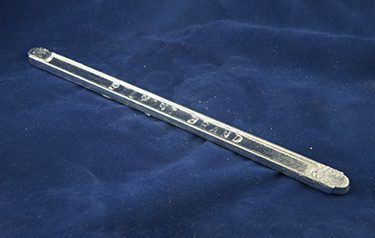
SAC305 Lead-Free Solder is a tin-silver-copper alloy with a nominal composition of 96.5% Sn, 3.0% Ag, and 0.5% Cu, the industry-standard lead-free solder formulation adopted across the electronics industry following the implementation of RoHS regulations. Solidus is 217C (423F) and liquidus is 220C (428F), producing a near-eutectic 5F melting range that enables clean, quick-setting joints comparable in behavior to 63/37 eutectic tin-lead solder. SAC305 outperforms all Sn-Cu based lead-free materials in wetting speed and yields across a wide range of flux technologies, and is used for wave soldering, selective soldering, and hand soldering in electronics manufacturing. It is also used to stabilize the copper content in wave solder baths, as copper dissolves from PCB pads and component leads into the bath over time. Forms: regular bar, shot, and ingot.
Available Forms
Regular Bar, Shot, Ingot
Product Code
7972
Technical Info
Thermal Properties
Melting Point (Solidus)423°F (217°C)
Melting Point (Liquidus)428°F (220°C)
Physical Properties
Density (imperial)0.266 lbs/in³
Density (metric)7.37 g/cm³
Primary ElementsSn · Ag · Cu
Lead FreeYes
Key Features
RoHS CompliantNear-Eutectic Lead-FreeWave and Selective SolderingBest-in-Class Wetting Speed
Nominal Composition
Sn: 96.5%
Ag: 3%
Cu: 0.5%
Frequently Asked Questions
Common technical inquiries regarding SAC305 Lead Free Solder Alloy
SAC305 combines a near-eutectic melting range (5F spread) with superior wetting performance and mechanical properties compared to alternative lead-free compositions. Its 96.5% Sn base provides conductivity and corrosion resistance, while 3.0% Ag strengthens the solder matrix and improves fatigue resistance, and 0.5% Cu reduces copper dissolution from PCB pads and component terminations into the solder bath. This combination of processability, joint reliability, and bath stability has made SAC305 the default specification for RoHS-compliant electronics production.
SAC305 wave solder baths are typically operated at 490-520F (255-270C), approximately 50-70F higher than the 440-460F typical for Sn-Pb wave soldering. This higher bath temperature requires PCB laminates and components rated for lead-free assembly, as the increased thermal exposure can delaminate standard FR4 and damage temperature-sensitive components specified for tin-lead processing.
During wave soldering, copper from PCB surface finish and component termination plating continuously dissolves into the solder bath, raising the copper concentration. Copper above approximately 0.8% in the bath increases solder viscosity, reduces fluidity, and causes bridging and icicling defects. Since SAC305 already contains 0.5% Cu, adding SAC305 bar to replenish bath volume introduces less incremental copper than adding lower-copper SAC alloys, helping maintain the bath copper within the acceptable 0.3-0.8% range.
Conflict-free Grade A tin (99.85% Sn min) in granular, pig, bar, sheet, anodes, shot, wire, slab, and ingot forms for soldering, plating, alloying, and food-safe applications.
99.99% Sn ultra-pure tin with extremely low lead, cadmium, antimony, and copper for applications requiring the highest purity grade. Shot, bars, pigs, and ingots.
Lead-silver solder in wire form. Good tensile, creep, and shear strength to 350F. Used for applications requiring superior fatigue properties versus non-silver solders.
Tin-zinc solder in capping bar, ingot, and wire forms. Used for aluminum-to-aluminum and aluminum-to-copper soldering at lower temperature than zinc-aluminum solders.