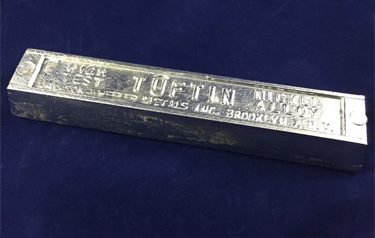
Tuftex Lubrite is a proprietary bearing alloy in the Jackson Wheeler Tuftex product line Forms: ingot. The Tuftex series covers a range of proprietary lead-base and tin-base Babbitt formulations developed by Jackson Wheeler for specific industrial bearing and sliding contact applications. Lubrite’s specific composition; mechanical properties; and application recommendations are proprietary and not publicly disclosed in the available product data. As with other Tuftex alloys Lubrite is intended for industrial bearing applications where standard ASTM B23 Babbitt grades may not provide the specific property combination required. Contact Belmont Metals for detailed application guidance; processing parameters; and technical data for this alloy. Forms: ingot.
Common technical inquiries regarding Tuftex Lubrite
Tuftex Lubrite is a proprietary Jackson Wheeler alloy with composition and technical specifications not publicly disclosed. Based on its position in the Tuftex line alongside other lead-base and tin-base Babbitt alloys it is formulated for industrial plain bearing applications. The name suggests a focus on lubricity or low-friction contact performance. For specific composition; mechanical properties; pouring temperature; and application recommendations contact Belmont Metals directly.
The Tuftex product line from Jackson Wheeler includes both lead-base alloys (4X; Chipper; Duratex; Gib Shoe; Rollite 77) and tin-base alloys (Duratin; Hercules; Navytex; Nickel Genuine; No. 73 Nickel) covering a range of bearing and industrial sliding contact applications. Lubrite fills a specific niche within this range likely targeting applications where lubricity is the primary performance criterion. The full Tuftex line allows specifying engineers to select the alloy composition best matched to their specific speed; load; temperature; and lubrication conditions.
When working with a proprietary alloy without published processing data the general lead-base Babbitt relining procedure provides a starting framework: clean and tin the bearing housing; melt the alloy to approximately 50-100F above its observed fully liquid temperature; skim dross; and pour. The pouring temperature can be estimated by observing the melt - the alloy should be fluid and mirror-bright with no evidence of partial solidification. Contact Belmont Metals for specific recommended parameters before proceeding with production relining operations.