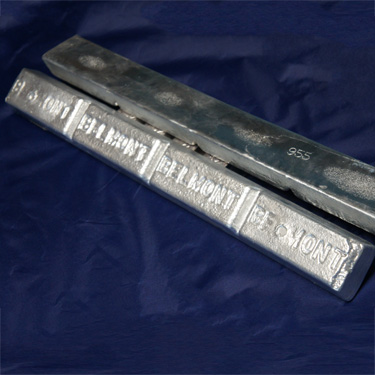
98/2 Zinc Aluminum Solder is a zinc-aluminum alloy with a nominal composition of 98% Zn and 2% Al. The 2% aluminum addition improves the wettability and adhesion of the zinc alloy in thermal spray and coating applications — aluminum modifies the surface oxide of the zinc droplets during spraying, improving bonding to steel substrates. This alloy is used as a coating sprayed onto steel by arc spray or flame spray processes to provide a corrosion-protective zinc-aluminum base coat — the aluminum addition improves the corrosion resistance of the coating compared to pure zinc spray, and the spray coating provides galvanic protection equivalent to hot-dip galvanizing for structural steel components that cannot be dipped (due to size or assembly considerations). The alloy is also used for metal joining in plumbing and electrical applications where a zinc-base solder is appropriate. Forms: 4-20 lb ingots and regular bars.
Common technical inquiries regarding 98/2 ZINC ALUMINUM SOLDER
Thermal spray zinc-aluminum provides sacrificial cathodic protection equivalent to hot-dip galvanizing at equivalent coating thickness, and the zinc-aluminum composition provides somewhat better corrosion resistance than pure zinc in industrial and marine atmospheres — the aluminum forms a more protective mixed zinc-aluminum oxide layer. Thermal spray can be applied on-site to assembled structures, bridges, and large components that cannot be dipped in a galvanizing kettle, making it the practical choice for field repair and large fabrications. Coating thickness is easily varied and verified by magnetic thickness gauging. Disadvantages compared to hot-dip are higher application cost per unit area and slightly less uniform coating penetration into recesses compared to hot-dip immersion.
Zinc-aluminum soldering requires an aggressive zinc-compatible flux — standard rosin and mild organic fluxes used for tin-lead solders are inadequate. Zinc chloride-based flux or a proprietary zinc solder flux containing zinc ammonium chloride is required to displace the tenacious zinc oxide layer and achieve metallurgical bonding. The alloy joins zinc, galvanized steel, aluminum, and copper when properly fluxed and at appropriate temperatures (approximately 750-800°F). Joint strength is modest compared to brazed or welded joints but adequate for low-stress plumbing and electrical connections. Post-soldering flux residue must be thoroughly removed as zinc chloride flux is highly corrosive and causes long-term joint degradation if left in place.
Store in a dry environment away from moisture — zinc corrodes in humid conditions, developing a white zinc carbonate/oxide surface coating (white rust) that reduces thermal spray coating adhesion and introduces oxides into soldered joints. Stack ingots on pallets away from damp floors. In coastal or industrial atmospheres with high humidity and sulfur dioxide, store in sealed packaging until use. White rust on ingot surfaces can be removed by light wire brushing before use in thermal spray operations; the underlying metal is not compromised. The alloy contains no regulated hazardous constituents at these concentrations and can be handled without special precautions beyond standard metalworking hygiene.
95% Zn / 5% Al zinc-aluminum solder with superior corrosion resistance. Forms: capping bar; 4-20 ingot; and regular bars. Used for aluminum-to-aluminum and aluminum-to-zinc soldering.