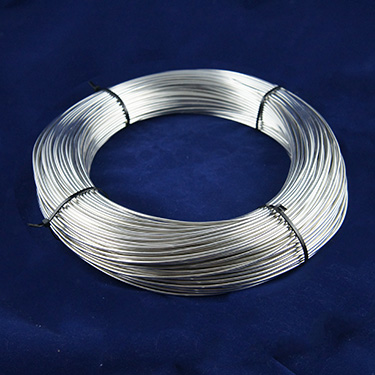
60/40 Tin-Lead Solder Wire is a near-eutectic tin-lead alloy supplied as 1/16″ (0.0625″) diameter solid wire, the standard wire diameter for fine electrical soldering, tinsmith work, and general hand soldering applications. The near-eutectic 60/40 composition provides a narrow melting range that produces clean, bright, quickly-setting joints, essential for delicate electrical connections where component movement during solidification must be prevented. This wire form is a quick-setting solder specifically suited for fine electrical and tinsmith work where precision feed control and rapid joint formation are required. It can be offered in additional wire diameters for applications requiring different solder volumes per unit length. Forms: 1/16″ diameter solid wire.
Common technical inquiries regarding 60/40 Tin Lead Solder Wire
The 1/16" diameter provides a small solder volume per unit length that allows precise control of the amount of solder deposited per joint, critical for fine pitch electronic soldering where excess solder bridges between adjacent pads cause short circuits. Larger diameter wires feed solder faster and suit larger joints, but the coarser feed rate makes it difficult to avoid excess deposition on small components.
Solid wire contains only the alloy with no flux incorporated, requiring a separate flux application before soldering. Flux-core wire contains rosin or other flux in channels running through the wire center, providing flux at the joint automatically as the wire melts. Solid wire is used where flux type and quantity need to be controlled precisely, for pot and bath charging, and for spray wire applications. Flux-core wire is more convenient for hand soldering where separate flux application is impractical.
Tip temperatures of 600-700F (315-370C) are standard for hand soldering 1/16" 60/40 wire on through-hole and surface mount electronic assemblies. Higher temperatures up to 750F may be needed for large thermal mass joints such as ground planes or power connectors. Lower temperatures risk cold joints and extended heat exposure that can damage temperature-sensitive components. The iron tip should be tinned before each use and the joint completed within 2-3 seconds to minimize thermal stress on adjacent components.
Tin-zinc solder wire on 5 lb spools and in ingot/anode forms. Melting range begins 390F. Used for capacitor spray wire coating and electronic component soldering.
50% Sn / 50% Pb general purpose solder in regular bar and capping bar forms. Wide melting range. Used for automotive radiator, gutter repair, and electrical applications.