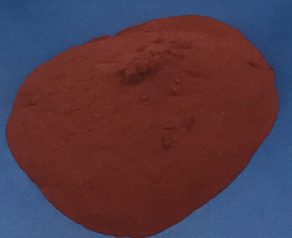
Cadmium Oxide (CdO) is a high-purity inorganic compound supplied as a fine brown or reddish-brown powder with an average particle size of 1 micron and a molecular weight of 128.41. It decomposes rather than melting at approximately 2,732°F (1,500°C), dissociating into cadmium vapor and oxygen at elevated temperatures rather than transitioning to a liquid phase.
Cadmium oxide is used as a primary starting material for cadmium electroplating bath preparation, where it is dissolved in acid to produce the cadmium salt solution used for deposition. In battery manufacturing it serves as a source material for nickel-cadmium electrode production. In the electronics and photovoltaic sectors it is valued for its n-type semiconductor properties and used in the synthesis of cadmium sulfide and other II-VI compounds. In glass and ceramics, cadmium oxide functions as a glaze colorant and optical glass component.
The 1-micron average particle size provides high surface area and reactivity for chemical dissolution and compound synthesis. Cadmium oxide is a regulated hazardous material — OSHA cadmium standard, EPA RCRA, and RoHS regulations apply.
Available Forms
Avg. Size 1 Micron
Product Code
3009
Technical Info
Thermal Properties
Melting Point (Solidus)610°F (321°C)
Melting Point (Liquidus)610°F (321°C)
Physical Properties
Density (imperial)0.312 lbs/in³
Density (metric)8.65 g/cm³
Primary ElementsCd
Lead FreeYes
Key Features
1 Micron Particle SizeHigh Chemical ReactivitySemiconductor PrecursorElectroplating Bath Starting Material
Frequently Asked Questions
Common technical inquiries regarding Cadmium Oxide
Cadmium oxide is dissolved in a dilute acid or complexing agent solution (typically sulfuric acid for sulfate baths or sodium cyanide for cyanide baths) to produce the cadmium salt that serves as the ion source for electrodeposition. The oxide form is preferred over metallic cadmium powder for bath preparation because it dissolves more readily and produces a cleaner, more controllable bath chemistry.
Cadmium oxide decomposes at approximately 2,732°F (1,500°C), dissociating into cadmium vapor and oxygen rather than transitioning to a liquid phase. For practical purposes this means CdO cannot be melted and cast — it must be reduced or dissolved chemically for use in metallurgical or electrochemical applications.
The 1-micron average particle size provides maximum surface area per unit weight, which accelerates dissolution kinetics in acid or cyanide bath preparation and improves homogeneity in ceramic glaze applications. However, sub-micron and micron-scale particles are respirable and present a significantly elevated inhalation hazard. Handling requires local exhaust ventilation, supplied-air or P100 respirators, and full-body protective clothing consistent with the OSHA cadmium standard.
High-purity cupric oxide (CuO) fine black powder. Used as glass and ceramic colorant, chemical catalyst, copper plating source, and wood treatment chemical.
High-purity cuprous oxide (Cu₂O) fine reddish-brown powder. Used as red ceramic glaze colorant, chemical catalyst, antifouling pigment, and copper chemical synthesis.