
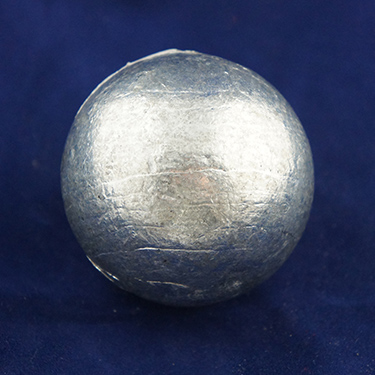
Product Code: 8000AG

Special High Grade 99.99% Zinc Ball Anodes

Lead-free99.99% SHG Purity 2" Diameter Ball Form No Flash or Gates Anode Basket Compatible
99.99% SHG zinc in 2" diameter solid ball anode form. No flash or gates. Used for electroplating applications requiring consistent dissolution in anode baskets.
Solidus
787°F (419°C)
Liquidus
787°F (419°C)
Density
0.258 lbs/in³ (7.13 g/cm³)
Primary Elements
Zn
Custom request

Can't find the right composition?

Product Overview

Special High Grade 99.99% Zinc Ball Anodes are precision-cast solid zinc balls produced at 2″ diameter for use in anode baskets in zinc electroplating operations. SHG zinc coatings are purer than hot-dipped galvanized coatings and produce deposits that are thinner and more ductile, allowing them to be made brighter and more lustrous for decorative and functional plating applications. The ball form provides several advantages over bar or slab anodes for basket-based plating systems: the spherical geometry produces consistent surface area-to-mass ratio as the balls dissolve, maintaining predictable dissolution rates throughout anode life; balls can be easily added to baskets during production to top up anode mass without interrupting the plating cycle; and the 2″ diameter is a standard size compatible with most commercial anode basket systems. Each ball is produced solid and clean with no flash or gates that could cause basket hang-ups, clog basket perforations, or create loose debris in the plating bath. Forms: 2″ diameter balls.

Available Forms

2" Diameter Balls

Product Code

8000AG

Technical Info

Thermal Properties

Melting Point (Solidus)787°F (419°C)
Melting Point (Liquidus)787°F (419°C)

Physical Properties

Density (imperial)0.258 lbs/in³
Density (metric)7.13 g/cm³
Primary ElementsZn
Lead FreeYes
Key Features
99.99% SHG Purity2" Diameter Ball FormNo Flash or GatesAnode Basket Compatible

Frequently Asked Questions

Common technical inquiries regarding Special High Grade 99.99% Zinc Ball Anodes
Hang-ups occur when anode pieces interlock or bridge across the basket interior, reducing effective anode surface area and creating uneven current distribution. Flash (thin metal fins at the parting line of the casting mold) and gates (the sprue attachment point) are the primary geometry features that cause balls to interlock. By producing balls without flash or gates the spherical geometry is maintained so balls move freely in the basket as they dissolve, always presenting fresh surface area to the bath and filling evenly under gravity.
Zinc ball anodes should be added when the basket fill level drops to approximately 50-60% of capacity, before the remaining balls are too few to maintain even current distribution. Balls should be clean and dry before addition. In automated systems hoppers or funnels feed balls into baskets continuously. In manual operations the basket is briefly lifted, balls are added, and the basket is reimmersed. Anode-to-cathode ratio should be monitored after each addition to maintain the bath zinc concentration within specification.
For complex rack-plated parts with recesses, holes, and variable geometry, maintaining even current distribution across the cathode is critical for uniform deposit thickness. Ball anodes in baskets positioned on multiple sides of the rack provide more distributed and configurable anode coverage than fixed bar anodes. As balls dissolve new surface area continuously presents itself from different positions in the basket, naturally averaging out any local dissolution non-uniformity.

Safety Data (SDS)

Request a Quote

Complete our Quote form, and we'll respond with options for you!