Lead-freeDiamond Bit InfiltrationImproved Wetting of CarbideCustom CompositionsEnhanced Wearability
Copper-silver alloy in shot and ingot forms. Used for diamond-impregnated drill bit infiltration where increased infiltration rate and wearability are required.
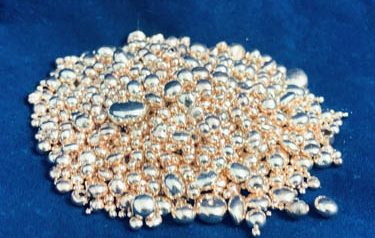
Copper-Silver Infiltration Alloy is a copper-silver binary alloy system Forms: varying compositions, developed for use in the production of diamond-impregnated drill bits where improved infiltration characteristics and enhanced wearability are required compared to standard copper-based binder alloys. The addition of silver to copper lowers the liquidus temperature of the alloy, improves wetting of diamond and tungsten carbide surfaces, and can increase the infiltration rate into packed carbide matrices, all of which contribute to improved bit performance and extended service life in demanding drilling applications. This alloy system has become increasingly popular in the drill bit manufacturing industry as operators seek performance improvements for specific formation types and drilling conditions. Standard compositions are Forms: shot and ingot form, and custom compositions can be produced to target specific infiltration temperatures, silver content levels, or mechanical property requirements for particular bit designs. Forms: 1/2″ and down polished shot and standard ingot.
Available Forms
1/2" & Down Polished Shot, Ingot
Product Code
48024
Technical Info
Thermal Properties
Melting Point (Solidus)1,434°F (779°C)
Melting Point (Liquidus)1,850°F (1,010°C)
Physical Properties
Density (imperial)0.332 lbs/in³
Density (metric)9.19 g/cm³
Primary ElementsCu · Ag
Lead FreeYes
Key Features
Diamond Bit InfiltrationImproved Wetting of CarbideCustom CompositionsEnhanced Wearability
Nominal Composition
Proprietary
Frequently Asked Questions
Common technical inquiries regarding Virgin Grade Copper Silver Alloy
Silver depresses the liquidus temperature of the copper-silver system toward the Cu-Ag eutectic at 72% Ag (melting at 1,435F/779C), reducing the infiltration temperature required and expanding the processing window. Silver also improves the wetting angle of the molten alloy on tungsten carbide and diamond surfaces, which promotes more complete infiltration of the carbide pack and reduces voids in the finished matrix.
Silver content in copper-silver drill bit binder alloys typically ranges from approximately 5% to 30% Ag, with specific compositions selected based on the target infiltration temperature, matrix hardness requirements, and cost considerations. Higher silver content lowers the infiltration temperature and improves wetting but increases alloy cost. Custom compositions allow bit manufacturers to optimize silver content for their specific furnace equipment, carbide grade, and target formation type.
Shot provides a free-flowing, uniform particulate that can be accurately weighed and poured into the top of a packed bit mold, distributing the alloy charge evenly across the mold cross-section before infiltration begins. Uniform alloy distribution at the start of the infiltration cycle promotes even downward flow through the carbide matrix, reducing the risk of uninfiltrated zones or alloy channeling. Ingot requires cutting or sectioning to fit molds and may produce non-uniform alloy placement compared to shot.