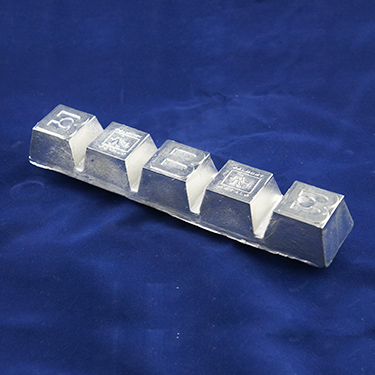
Tin Base Levalloy 1 is a tin-lead-antimony-cadmium casting alloy with a nominal composition of 90% Sn, 6% Pb, 2% Sb, and 2% Cd, specially formulated for castings with flat surfaces requiring a high polish. The cadmium addition improves the alloy’s ability to produce extremely smooth, mirror-quality flat surfaces as cast — cadmium in tin-base alloys modifies the solidification microstructure, reducing surface grain relief that causes the orange-peel texture visible in castings polished to a high sheen. The 6% lead addition ensures pressure tightness and aids flat surface integrity in large flat casting areas. The relatively low melting point of this formulation lengthens rubber and metal mold life in spin casting production compared to higher-melting alloys. Specially suited to casting mirror-quality plaques, medallions, flat commemorative pieces, and decorative hardware where the flat surface finish quality is the primary requirement. Note: contains cadmium — appropriate ventilation and PPE required during melting. Forms: 5-6 lb ingots.
Available Forms
5-6 Ingot
Product Code
79010
Technical Info
Thermal Properties
Melting Point (Solidus)266°F (130°C)
Melting Point (Liquidus)329°F (165°C)
Physical Properties
Density (imperial)0.287 lbs/in³
Density (metric)7.94 g/cm³
Primary ElementsSn · Pb · Sb · Cd
Lead FreeNo — contains lead
Key Features
Optimized for Flat Polished SurfacesCadmium Microstructure RefinementPlaque and Medallion GradeExtended Mold Life
Nominal Composition
90% Sn
6% Pb
2% Cd
2% Sb
Frequently Asked Questions
Common technical inquiries regarding Tin Base Levalloy 1
Cadmium in tin-base alloys acts as a microstructure refiner — it suppresses the formation of large primary tin dendrites that, when the as-cast surface is polished, produce a visible grain relief pattern (the orange peel effect) in reflected light. With cadmium present, the solidification microstructure is finer and more uniform, producing a smoother as-cast surface that polishes to a higher flat sheen with less buffing. For plaques, medallions, and flat decorative pieces where the primary visual quality metric is the mirror quality of large flat fields, this refinement is significant. On curved or textured surfaces where flat sheen is less critical, the cadmium benefit is marginal.
OSHA's cadmium standard (29 CFR 1910.1027) sets a PEL of 5 micrograms per cubic meter — among the lowest of any regulated industrial metal — and requires local exhaust ventilation at all melting operations, respiratory protection (minimum HEPA half-face respirator), biological monitoring (urine cadmium and beta-2 microglobulin tests for kidney function), and a written compliance program for facilities with regular cadmium exposure. The low melting temperature of this alloy (approximately 500-520°F) reduces cadmium volatilization compared to higher-temperature processes, but is not negligible — LEV is required regardless of melt temperature. Substitution with cadmium-free alloys (Special 92% Pewter, Britannia) should be evaluated before continuing use of cadmium-containing formulations.
Start with a light sanding of any surface imperfections using 400-600 grit wet-dry sandpaper to eliminate parting line flash and any casting marks, followed by 800-1200 grit to refine the scratch pattern. Progress to a soft muslin buffing wheel with white rouge (tin oxide or aluminum oxide compound) at medium speed — the relatively soft tin-base alloy polishes quickly and burns easily at high buffing speed. Final polish with a soft flannel wheel and a fine chrome oxide or jeweler's rouge compound produces a mirror surface. Avoid pressing hard on flat areas — tin alloys deform under buffing pressure, producing waves on large flat fields. Light, progressive polishing passes maintain flatness.
Lead-free Britannia pewter alloy for spin cast molds. Solidus 435-463F, liquidus 478-490F. Used for fashion jewelry with thin cross sections or fine filigree.
High-purity tin-based lead-free pewter, less than 50 ppm lead. Solidus 515-635F, liquidus 465-485F. Used for spin cast rubber or silicone molds with thick cross sections.
To provide the best experiences, we use technologies like cookies to store and/or access device information. Consenting to these technologies will allow us to process data such as browsing behavior or unique IDs on this site. Not consenting or withdrawing consent, may adversely affect certain features and functions.
Functional
Always active
The technical storage or access is strictly necessary for the legitimate purpose of enabling the use of a specific service explicitly requested by the subscriber or user, or for the sole purpose of carrying out the transmission of a communication over an electronic communications network.
Preferences
The technical storage or access is necessary for the legitimate purpose of storing preferences that are not requested by the subscriber or user.
Statistics
The technical storage or access that is used exclusively for statistical purposes.The technical storage or access that is used exclusively for anonymous statistical purposes. Without a subpoena, voluntary compliance on the part of your Internet Service Provider, or additional records from a third party, information stored or retrieved for this purpose alone cannot usually be used to identify you.
Marketing
The technical storage or access is required to create user profiles to send advertising, or to track the user on a website or across several websites for similar marketing purposes.