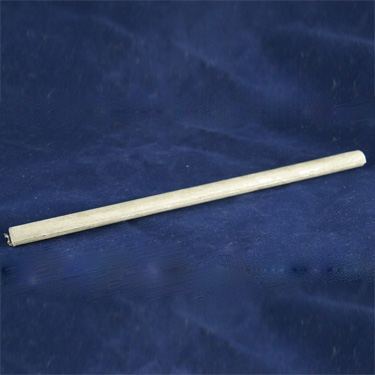
Lead-freeMultiple Wire DiametersLow Coefficient of FrictionElectroplating Anode WireFatigue Resistant
99.95% pure cadmium wire in diameters from 3/32" to 0.79". Melting point 610°F (321°C). Used for electroplating anodes, low-melting alloys, and bearing solders.
Cadmium Metal Wire is a 99.95% pure cadmium product with a melting point of 610°F (321°C) and a density of 8.65 g/cm³, Forms: five diameters: 3/32″, 1/8″, 3/16″, 1/4″, and 0.79″. Cadmium wire combines the metal’s characteristic corrosion resistance, low coefficient of friction, and resistance to fatigue in a form suited to continuous-feed and coil-based applications.
Primary uses include electroplating anode wire for continuous cadmium plating lines, where the wire form feeds smoothly through anode baskets and dissolution fixtures. The low coefficient of friction makes cadmium an effective bearing and solder material, particularly in applications where conventional high-melting solders cannot be used. Cadmium wire is also used in low-melting alloy production as a measured feedstock and in specialized joining operations.
Forms: five wire diameters to suit different plating bath geometries and application requirements. Cadmium is a regulated hazardous material — OSHA (29 CFR 1910.1027), EPA RCRA, and RoHS requirements apply.
Multiple Wire DiametersLow Coefficient of FrictionElectroplating Anode WireFatigue Resistant
Nominal Composition
99.95% Cd
Trace
Frequently Asked Questions
Common technical inquiries regarding Cadmium Wire
Wire diameter selection depends on the anode basket or dissolution fixture geometry of the plating line. Finer diameters (3/32" to 1/8") are used in tight-pitch baskets and wire-feed anode systems where flexibility is important. Larger diameters (3/16" to 1/4") are preferred where structural rigidity in the anode basket is required. The 0.79" diameter suits applications requiring a rigid rod-form anode.
Cadmium's low friction and fatigue resistance made it historically useful in bearing overlay coatings and specialized bearing solders where the metal must withstand repeated mechanical loading without galling. In overlay bearing applications, a thin cadmium layer on a lead-bronze backing reduced wear and seizure risk. These applications have largely been replaced by modern alternatives, but cadmium wire solders remain in use in specific maintenance and repair contexts.
Cadmium wire can in principle be used in wire-arc thermal spray equipment to deposit cadmium coatings. However, the generation of cadmium fume in thermal spray operations creates severe inhalation hazards requiring fully enclosed spray booths, continuous air monitoring, and supplied-air respirators. Most modern facilities have replaced cadmium thermal spray with alternative coating systems.
Related Products
Cadmium Powder
99.2% pure cadmium powder, Forms: 100 mesh, 325 mesh, and unclassified grades. Used as filler in plastics composites and semiconductor applications.
99.95% pure cadmium metal. Melting point 610°F (321°C). Forms: sticks, cut pieces, and slabs. Used for electroplating, batteries, and fusible alloy production.
99.95% pure cadmium metal in 16-20 mesh granular form, approximately 1mm particle size. Used for battery manufacture, electroplating, and low-melting alloy production.
To provide the best experiences, we use technologies like cookies to store and/or access device information. Consenting to these technologies will allow us to process data such as browsing behavior or unique IDs on this site. Not consenting or withdrawing consent, may adversely affect certain features and functions.
Functional
Always active
The technical storage or access is strictly necessary for the legitimate purpose of enabling the use of a specific service explicitly requested by the subscriber or user, or for the sole purpose of carrying out the transmission of a communication over an electronic communications network.
Preferences
The technical storage or access is necessary for the legitimate purpose of storing preferences that are not requested by the subscriber or user.
Statistics
The technical storage or access that is used exclusively for statistical purposes.The technical storage or access that is used exclusively for anonymous statistical purposes. Without a subpoena, voluntary compliance on the part of your Internet Service Provider, or additional records from a third party, information stored or retrieved for this purpose alone cannot usually be used to identify you.
Marketing
The technical storage or access is required to create user profiles to send advertising, or to track the user on a website or across several websites for similar marketing purposes.