852.1 is a specialized aluminum-tin-copper-nickel casting alloy with a nominal composition of 90% Al, 6% Sn, 2% Cu, 1.2% Ni, and 0.8% Mg. The 6% tin provides natural lubricity and seizure resistance, while copper and nickel additions increase yield strength and hardness beyond what standard aluminum alloys can achieve. Solidus is approximately 445°F (229°C) and liquidus approximately 1,190°F (643°C), with a density of 0.103 lbs/in³ (2.85 g/cm³).
This alloy is engineered as a lightweight alternative to traditional bearing bronzes for high-speed, heavy-load applications in hydraulic components, automotive engine bearings, connecting rod bushings, and industrial machinery. Where bronze bearings are over-specified on weight or cost, 852.1 delivers comparable lubricity and seizure resistance at significantly lower density. Excellent machinability supports precision bearing bore finishing.
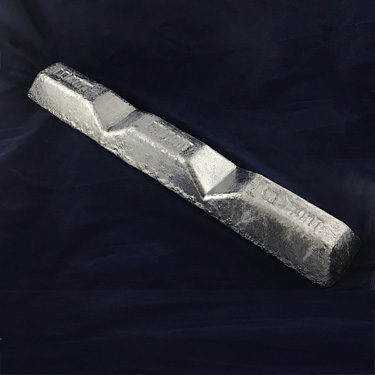
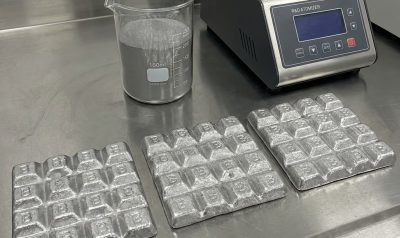
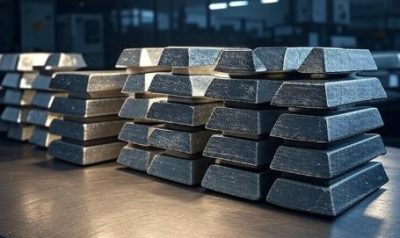
Supplied in 3–16 lb ingots, 852.1 is suited to sand and permanent mold casting of bearing sleeves, bushings, and wear plates requiring consistent lubrication properties and high wear resistance.
Common technical inquiries regarding 852.1 Aluminum Alloy
Tin in 852.1 forms a soft, low-shear-strength phase dispersed throughout the harder aluminum matrix, providing the same lubricity mechanism as lead in traditional bearing bronzes. Unlike lead, tin is non-toxic and compatible with modern environmental regulations. While lead-bronze retains some advantages in conformability under shock loading, 852.1 offers a viable lead-free bearing alloy for many hydraulic and automotive applications.
852.1 significantly outperforms standard Al-Si alloys in boundary lubrication conditions — when the oil film between bearing surfaces breaks down under high load or low speed. The tin phase acts as a solid lubricant under these conditions, preventing metal-to-metal seizure. Standard aluminum casting alloys lack this mechanism and will gall and seize under the same conditions.
The approximately 745°F spread between solidus (445°F) and liquidus (1,190°F) is exceptionally wide and indicates that 852.1 solidifies over a long temperature range rather than freezing sharply. This requires careful risering and gating design to avoid shrinkage porosity, as the mushy zone persists for an extended period during solidification. Directional solidification toward a well-placed riser is essential for producing sound bearing castings.