
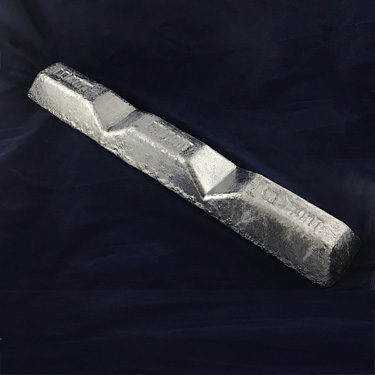
Product Code: 1918

850.1 Aluminum Alloy

Lead-freeAA 850.1 Aluminum-Tin Bearing Alloy Good Lubricity Lightweight Bronze Alternative
Aluminum-tin bearing alloy (91.75% Al, 6.25% Sn, 1% Cu, 1% Ni) to AA 850.1 for cast bearings and bushings. 3-16 ingot.
Solidus
437°F (225°C)
Liquidus
1,202°F (650°C)
Density
0.104 lbs/in³ (2.88 g/cm³)
Primary Elements
Al, Cu, Ni, Sn
Nominal Composition
1% Cu, 1% Ni, 6.25% Sn, 91.75% Al
Custom request

Can't find the right composition?

Product Overview

850.1 Aluminum Alloy is the ingot form of the 850 aluminum-tin bearing alloy, with a nominal composition of 6.25% Sn, 1% Cu, 1% Ni and the balance aluminum. The tin forms a soft, finely dispersed phase in a stronger aluminum matrix, giving the cast part natural lubricity and resistance to seizing, while copper and nickel add strength.

Solidus is approximately 437°F (225°C) and liquidus approximately 1,202°F (650°C), and the density of about 0.104 lbs/in³ (2.88 g/cm³) is roughly a third that of bearing bronze. 850 is used for cast bearings, bushings and wear parts in engines, pumps, compressors and machine tools, often as a lighter alternative to bronze.

Forms: 3-16 ingot.
Available Forms

3-16 Ingot

Product Code

1918

Technical Info

Thermal Properties

Melting Point (Solidus)437°F (225°C)
Melting Point (Liquidus)1,202°F (650°C)

Physical Properties

Density (imperial)0.104 lbs/in³
Density (metric)2.88 g/cm³
Primary ElementsAl, Cu, Ni, Sn
SpecificationAA 850.1
Lead FreeYes
Key Features
Aluminum-Tin Bearing AlloyGood LubricityLightweight Bronze Alternative

Nominal Composition

  • 91.75% Al
  • 6.25% Sn
  • 1% Cu
  • 1% Ni
Both are aluminum-tin bearing alloys with about 6% tin. 852 adds more copper (about 2%) and a magnesium addition, which raise strength and hardness. 850 has lower copper and no magnesium, making it somewhat softer and more conformable.
Tin barely dissolves in aluminum, so it solidifies as a separate soft phase spread through the matrix. Under sliding contact this phase acts as a built-in lubricant, reducing friction and the risk of seizing if lubrication is briefly lost.
850 is cast in sand and permanent molds. The wide freezing range calls for good feeding and controlled cooling to avoid shrinkage porosity, and parts are usually heat treated to stabilize dimensions before machining.

Safety Data (SDS)

Request a Quote

Complete our Quote form, and we'll respond with options for you!