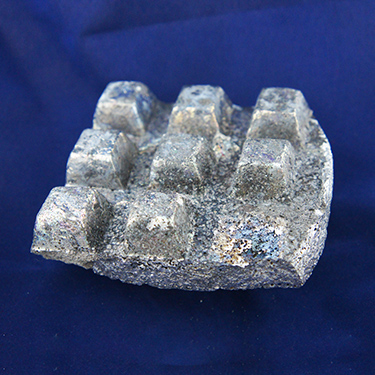
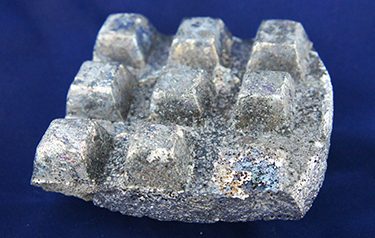
Number 26 Aluminum Bronze Degasifier is a proprietary compound degasifier engineered specifically for use with the aluminum bronze family of alloys. The composition is proprietary and the product is formulated to effectively remove dissolved hydrogen and other unwanted gases from aluminum bronze melts — the primary cause of gas porosity in aluminum bronze castings — without adversely affecting alloy chemistry or generating excessive dross that would contaminate the melt. Aluminum bronzes are particularly susceptible to hydrogen pickup from atmospheric moisture and from the aluminum oxide film on the melt surface, making effective degassing essential for producing sound pressure-tight castings. Forms: 40-15 waffle and broken waffle forms for controlled addition to the melt.
Available Forms
40-15 Waffle, Broken Waffle
Product Code
46314
Technical Info
Thermal Properties
Melting Point (Solidus)1,150°F (621°C)
Melting Point (Liquidus)1,850°F (1,010°C)
Physical Properties
Density (imperial)0.23 lbs/in³
Density (metric)6.4 g/cm³
Primary ElementsCu · Al · Mn · Mg · Ti · Ca
Lead FreeYes
Key Features
Aluminum Bronze DegasifierReduces Hydrogen PorosityProprietary CompoundWaffle Form
Nominal Composition
Proprietary
Frequently Asked Questions
Common technical inquiries regarding #26 Aluminum Bronze Degasifier
Aluminum bronze melts are more susceptible to hydrogen pickup than tin bronzes due to the aluminum content — aluminum reacts with atmospheric moisture to form Al2O3 and releases hydrogen into the melt. The persistent oxide skin on aluminum bronze melts also traps moisture at the melt surface, providing a continuous source of hydrogen. Tin bronzes do not have this aluminum oxidation mechanism and are less prone to hydrogen porosity. For aluminum bronze pressure components such as pump bodies and marine valves, compound degassing treatment is standard practice.
Treatment should occur after the charge is fully melted and at pouring temperature, just before final skimming and pouring. Break the waffle into appropriate-sized pieces and plunge below the melt surface using a preheated plunger rod — surface addition is ineffective as the reaction must occur in the body of the melt. After treatment, skim the reaction products thoroughly and verify temperature before pouring. Do not treat too early and then allow a long hold period, as the melt will re-absorb hydrogen from the atmosphere during extended holding.
Contact Belmont for specific recommendations for nickel-aluminum bronze alloys. The higher nickel and iron content of C95500 and C95800 compared to C95200 changes the melt chemistry and the degassing requirements. A degasifier formulated for the standard aluminum bronze family may not be optimally formulated for nickel-aluminum bronze — using the wrong compound degasifier can introduce contaminants or produce incomplete degassing in alloys with significantly different compositions.
Phosphor copper deoxidizer (85% Cu, 15% P) — the most widely used copper alloy deoxidizer. Effectively removes oxygen with minimal dross. Shot and waffle forms.
2% boron copper master alloy for deoxidizing pure copper or grain refining brass alloys. Forms: polished shot; unpolished shot; waffle; and 4-5 oz pieces.