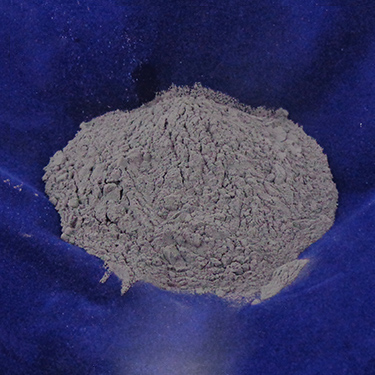
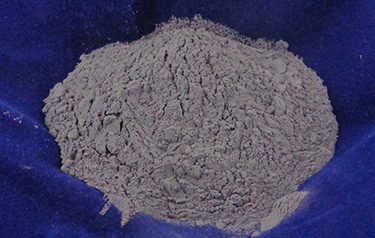
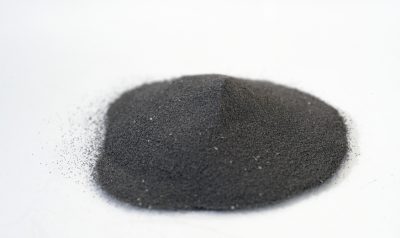
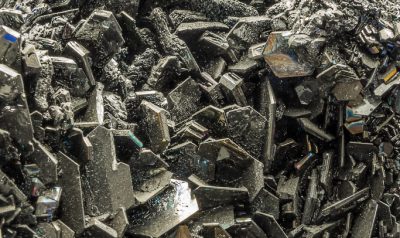
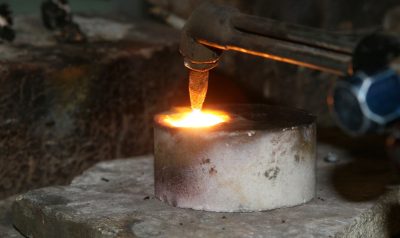
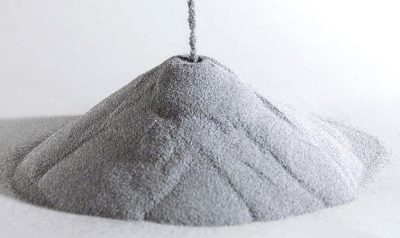
Hydrogen Reduced Iron Powder in iron powder form (#100 grade) is produced by hydrogen reduction of iron oxide, yielding a minimum 90% Fe powder with low carbon, oxygen, and nitrogen content. The sponge-like particle morphology provides good compressibility and green strength for powder metallurgy pressing operations. Supplied in 1 lb units. This form is used for sintered structural component manufacture, soft magnetic part production, brazing filler formulations, and food iron fortification. The consistent particle morphology and low oxide content ensure reliable compaction behavior and sintering response across production runs. The 1 lb unit format is suited for laboratory, research, and small-batch production applications. Iron powder should be stored in sealed containers away from moisture to prevent surface oxidation, which can affect compressibility and sintering performance.
Available Forms
Iron Powder
Product Code
FE009B
Technical Info
Thermal Properties
Melting Point (Solidus)2795
Melting Point (Liquidus)2795
Physical Properties
Density (imperial)0.145
Density (metric)4
Physical Properties
Primary ElementsFe
Lead FreeYes
Performance tags
1 lb Unit FormatHydrogen Reduced Low Oxide ContentSintered Component ProductionSoft Magnetic Applications
Frequently Asked Questions
Common technical inquiries regarding #100 Hydrogen Reduced Iron Powder
Surface oxide on iron powder particles inhibits metal-to-metal bonding during sintering by acting as a barrier between particles. Even thin oxide layers can significantly reduce green strength and final sintered density. Oxide can be reduced during sintering in a hydrogen or dissociated ammonia atmosphere, but thick oxide layers from improper storage may not fully reduce at standard sintering temperatures. Sealed storage away from moisture and minimizing air exposure during handling prevents oxide buildup.
Green strength is the mechanical strength of a powder compact after pressing but before sintering. Hydrogen reduced iron powder's sponge-like particle morphology provides good mechanical interlocking between particles during compaction, giving green compacts enough strength to be ejected from the die, handled, and loaded into the sintering furnace without cracking. Adequate green strength is essential for dimensional accuracy in net-shape or near-net-shape PM part production.
Iron powder is used in certain brazing paste formulations, particularly for iron-copper, iron-nickel, and activated diffusion brazing systems, where it contributes to the filler metal composition or acts as a reactive component. The low oxide content of hydrogen reduced powder improves wetting and flow behavior in the brazing joint. For specific brazing applications, the particle size, composition, and oxide level should be verified against the brazing paste specification before use.
High-purity SW grade tin powder. Melting point 449.5°F (231.9°C). Used for sintered components, friction materials, tin compound synthesis, and aerospace/electronics powder metallurgy.
99.85% pure tin powder, available in #100 atomized and 100 mesh grades. Melting point 449.5°F (231.9°C). Used for powder metallurgy, friction materials, soldering pastes, and sintered components.
High-purity cuprous oxide (Cu₂O) fine reddish-brown powder. Used as red ceramic glaze colorant, chemical catalyst, antifouling pigment, and copper chemical synthesis.